

In the past decade, the landscape of human activities and events has undergone a profound transformation with the advent of the internet. Among the many facets of life that have experienced significant redefinition, communication stands out as one of the most notable. Gone are the days when communication relied on letters sent through traditional postal services, with their inherent delays and limited feedback mechanisms.
The evolution of communication can be traced from the era of handwritten letters transported via commercial buses or individuals traveling to deliver messages in person, to the introduction of telephones, which, while revolutionary, remained out of reach for many due to cost and infrastructure limitations. The transition from wired telephones to the accessibility and affordability of mobile phones marked a significant milestone, but it was the emergence of the internet that truly revolutionized communication as we know it today.
With the proliferation of social networking platforms, the internet has become the epicenter of communication, offering unparalleled speed, efficiency, and interactivity. The world has been figuratively compressed into a single electronic space, where information flows freely across vast distances with a simple click or tap of a screen. Social media, in particular, has emerged as a powerful tool for facilitating interaction and fostering immediate feedback in communication processes.
In this digital age, individuals and institutions alike have embraced social media as a means of engaging with audiences, disseminating information, and fostering dialogue on a global scale. However, not everyone has embraced these platforms with the same enthusiasm.
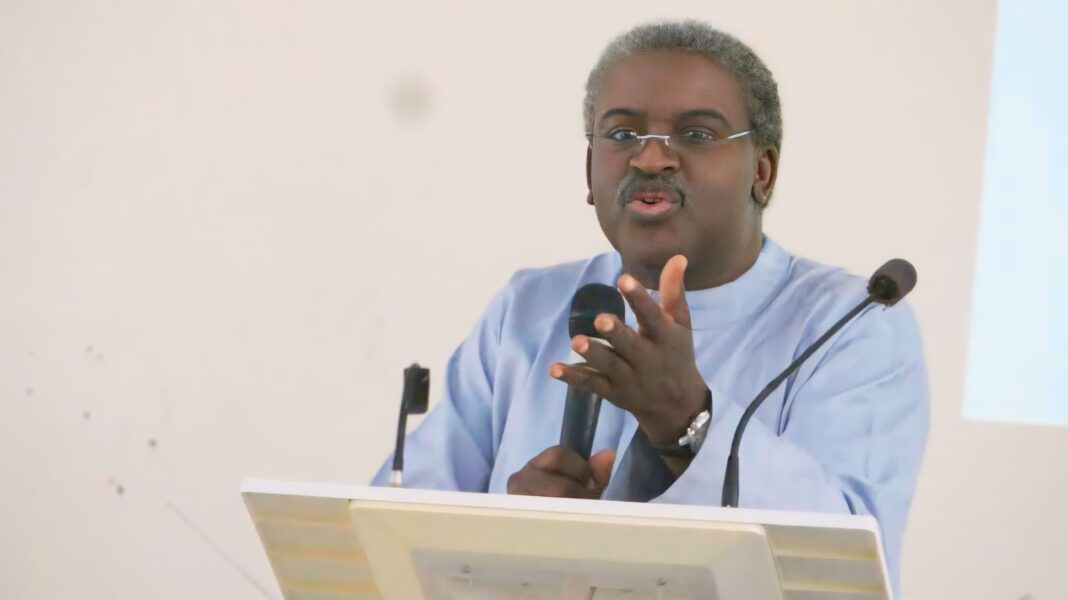
One such individual is Professor Ibrahim Bello-Kano, a renowned figure in both Nigerian and international academic circles. Professor Bello-Kano is known for his insightful critiques and engaging writing style.
Professor Bello-Kano, who teaches at the prestigious department of English and European Languages of Bayero University, Kano, is known by his initials IBK. He made two thought-provoking comments on Pantami’s book, Scholar’s Journey: Navigating Academia and Skills Rather Than Just Degrees.
IBK’s comments have ignited discussions on various social media platforms, even though he himself isn’t active there. The debate has divided commentators into two supporter camps: those who agree with IBK’s analysis and those who defend Pantami’s work. This online discourse highlights the significance of IBK’s contribution and the ongoing relevance of the topic at hand.
Despite his absence from social media platforms like Facebook and Twitter, Professor Bello-Kano’s recent commentary on the works of the immediate-past Minister of Communications and Digital Economy, Prof. Isa Pantami, has sparked a lively online debate. This underscores his enduring influence within the intellectual community.
Professor Bello-Kano’s profile is that of a distinguished scholar who seamlessly integrates academic rigor with a commitment to social activism. While he may eschew direct participation in social media, his ability to provoke critical discussions and shape public discourse demonstrates the enduring power of intellectual engagement in the digital age.
However, Professor Bello-Kano’s case exemplifies how impactful ideas can transcend the limitations of social media platforms. His absence from these online spaces highlights the fact that intellectual influence and the power to spark meaningful dialogue can persist through more traditional avenues of scholarship and public engagement.
Does Professor Bello-Kano’s case for the enduring power of ideas through traditional scholarship hold weight in today’s social media-driven world? Or has the immediacy and reach of online platforms fundamentally altered the way knowledge is shared and debated? Is there a way to bridge the gap between the established methods of academia and the dynamic nature of online discourse? Can Professor Bello-Kano’s influence, achieved without social media, inspire new forms of intellectual engagement in the digital age?
Buhari Abba is a community reporter at CITAD Online Radio