

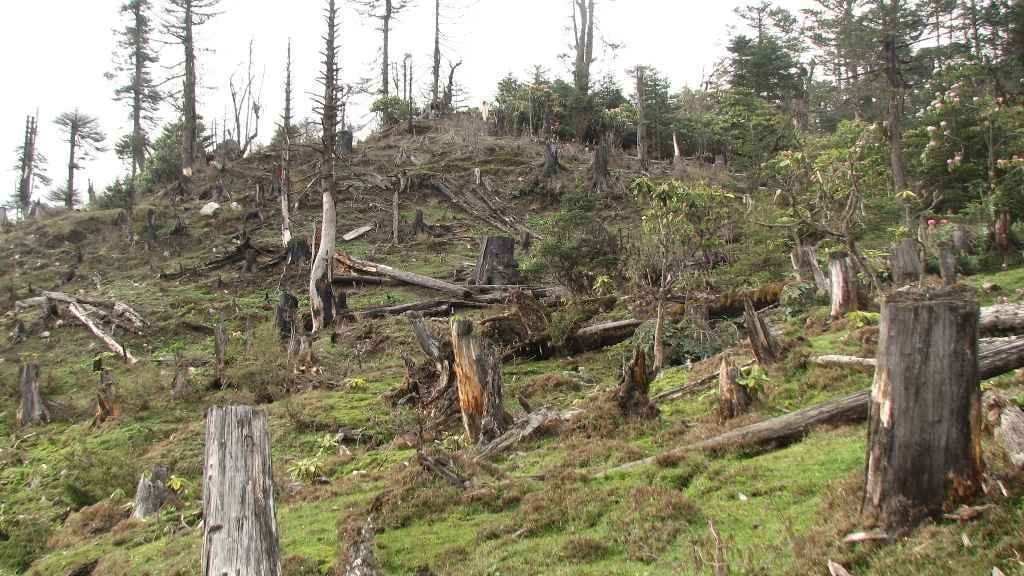

The Centre for Information Technology and Development (CITAD) has raised alarm over the growing threat climate change poses to trees and plant species in Kano State, calling for intensified public education and awareness on environmental protection.
Speaking during a public lecture held on Wednesday in Kano, an environmentalist, Mr. Sani Muhammad Khamees, said the state’s vegetation and biodiversity were facing serious risks due to climate change, habitat destruction, and unsustainable human activities.
The lecture, titled “Educational Awareness and the Protection of Threatened Trees and Plant Species in Kano State, Nigeria,” was part of CITAD’s ongoing efforts to promote community engagement in environmental preservation.
Khamees explained that the survival of trees and plants is crucial for maintaining ecological balance, human health, and environmental stability. He emphasized that supporting research, conserving biodiversity, and promoting sustainable practices are vital to prevent the permanent loss of endangered species.
He urged governments at all levels to enforce existing environmental laws and policies, while calling on communities to take ownership of conservation efforts.
“Raising public awareness about biodiversity and the risks facing endangered species is key to encouraging citizens’ participation in conservation,” he said, adding that tree planting alone would not yield results unless people developed a sense of responsibility toward nature.
Khamees also advocated for a more comprehensive conservation approach involving habitat protection, restoration, and the management of invasive species. He said empowering local communities and reviving traditional conservation ethics could help safeguard rare and threatened plant species.
He disclosed that CITAD would continue to monitor endangered plants, assess habitat quality, and evaluate conservation outcomes to guide future interventions.
Chairing the occasion, Prof. Ibrahim Lawal of the Faculty of Life Sciences, Bayero University, Kano, commended CITAD for drawing attention to an issue that, in his words, “touches the roots of our existence.” He noted that trees and plants are not just part of the environment but part of human life, providing oxygen, food, and cultural identity.
“Protecting trees is protecting ourselves,” he said, urging both government and citizens to view environmental protection as a shared responsibility. Prof. Lawal emphasized that universities, research institutions, and civil society groups must collaborate more closely to generate data-driven solutions to climate threats.
Earlier, the Executive Director of CITAD, Mr. Y. Z. Ya’u, stressed the importance of protecting trees as a key component of environmental sustainability. He recalled the controversy that followed the proposed relocation of the Kano Zoo, noting that public pressure forced the government to suspend the plan.
Ya’u warned that if the land had been sold, property developers might have destroyed trees that had existed for over two centuries. “Such trees have a high carbon storage capacity that would take decades to recover if lost,” he said.
The CITAD boss added that the disappearance of some tree species had led to the decline of certain bird populations, including vultures, in Kano.
He expressed hope that the lecture would rekindle public interest in tree preservation, warning that dependence on cooking gas should not be viewed as an environmentally safe alternative, as it also contributes to ecological degradation.