
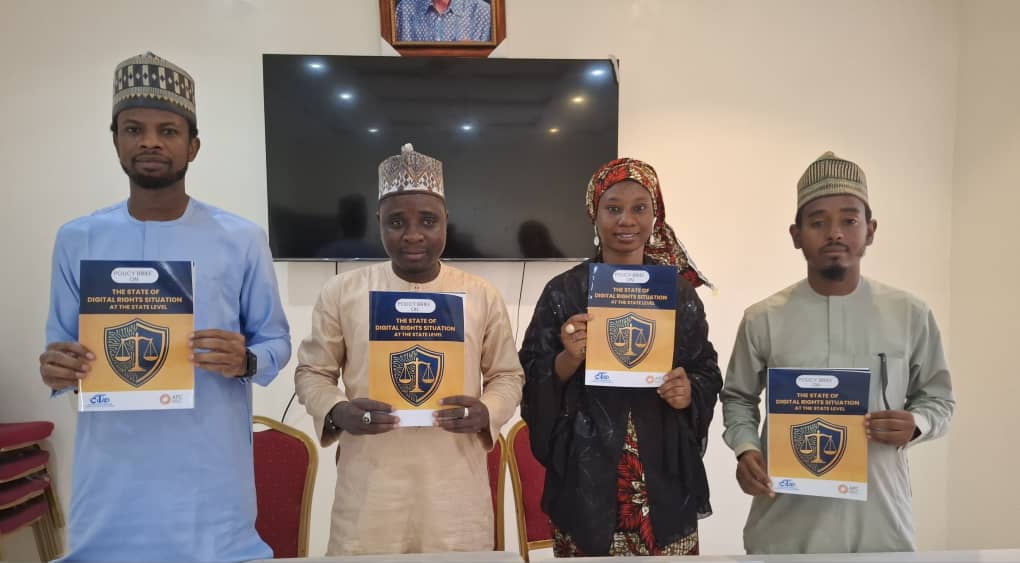

The Centre for Information Technology and Development (CITAD) on Friday unveiled a policy brief exposing the worsening state of digital rights observance across Nigeria’s states and local government areas.
Speaking at a press briefing in Kano, Mr Ali Sabo, Digital Rights Lead at CITAD, said the document reveals “a disturbing pattern of abuses—particularly at state and local government levels—where citizens are increasingly arrested, detained, or harassed for expressing opinions online.”
He cited recent incidents from Kano, Jigawa, Niger, Katsina, and Kwara States, including the arrest of Comrade Abiyo Roni in Jigawa for criticising his local government chairman on social media, and the detention of blogger Ajala Adeshina Shuaib in Kwara State over alleged defamation following comments about a senator.
Sabo also highlighted cases involving corps member Zakariyya Kabeer Gwagwarwa and other citizens in Kano, reflecting “a growing culture of intolerance to criticism, abuse of power, and the weaponisation of law enforcement agencies to silence dissent—especially at the grassroots.”
The brief further documents violations by private actors, particularly around privacy and consent. Sabo recalled a case of a minor whose video was shared online without consent, causing ridicule and emotional trauma, as well as a Kano incident where a woman’s image was used in advertising without permission.
He expressed alarm over the rising cases of online harassment and non-consensual sharing of intimate images, mostly affecting women and girls, some of whom have suffered fatal consequences following online interactions.
According to CITAD, the persistence of these abuses is fueled by low digital rights awareness, weak institutional redress mechanisms, and insufficient training for judges, lawyers, and law enforcement officers at state and local levels. “Most capacity-building initiatives are concentrated in Abuja and Lagos, leaving state and local actors poorly equipped,” Sabo noted.
CITAD urged state governments to take proactive steps to protect digital rights by stopping arrests for online expression, training officials on relevant laws, and updating regulations to meet global standards. The organisation also called on civil society groups and the media to extend awareness campaigns and monitor abuses beyond Abuja and Lagos.
“Digital rights are not optional privileges. They are fundamental human rights that underpin democracy, accountability, innovation, and development,” Sabo said, stressing that neglecting these rights “poses a serious threat to our collective future.”
CITAD pledged to continue documenting abuses, supporting victims, engaging policymakers, and advocating for a safe, inclusive, and rights-respecting digital environment in Nigeria.